Award Manufacturing & Wholesale Sourcing Guides
Technical playbooks from our Zhejiang production floor covering wood substrates, metal plate adhesives, laser compatibility, and international DDP freight economics.
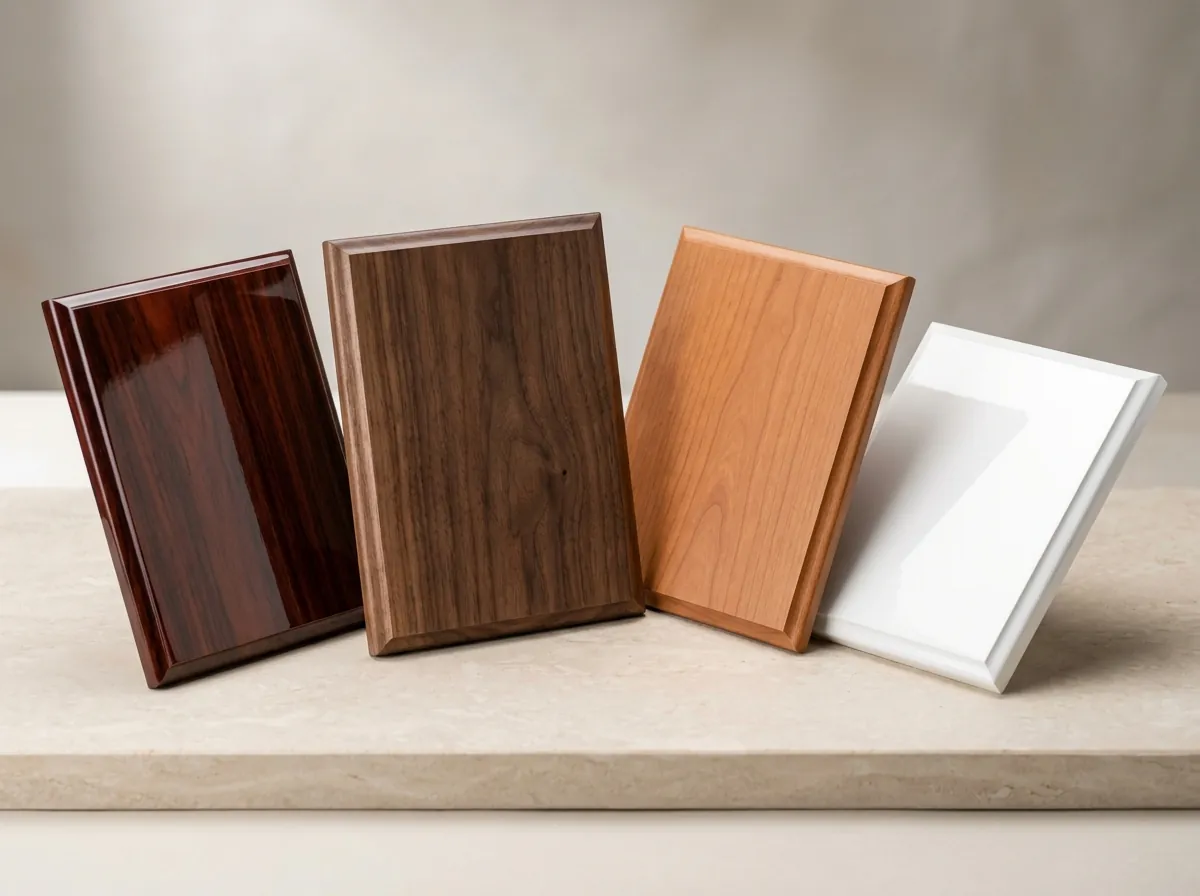
Choosing the right blank plaque board directly impacts both your wholesale margin and your shop’s engraving workflow. Here is how the three core substrates compare on the JMNY production floor:
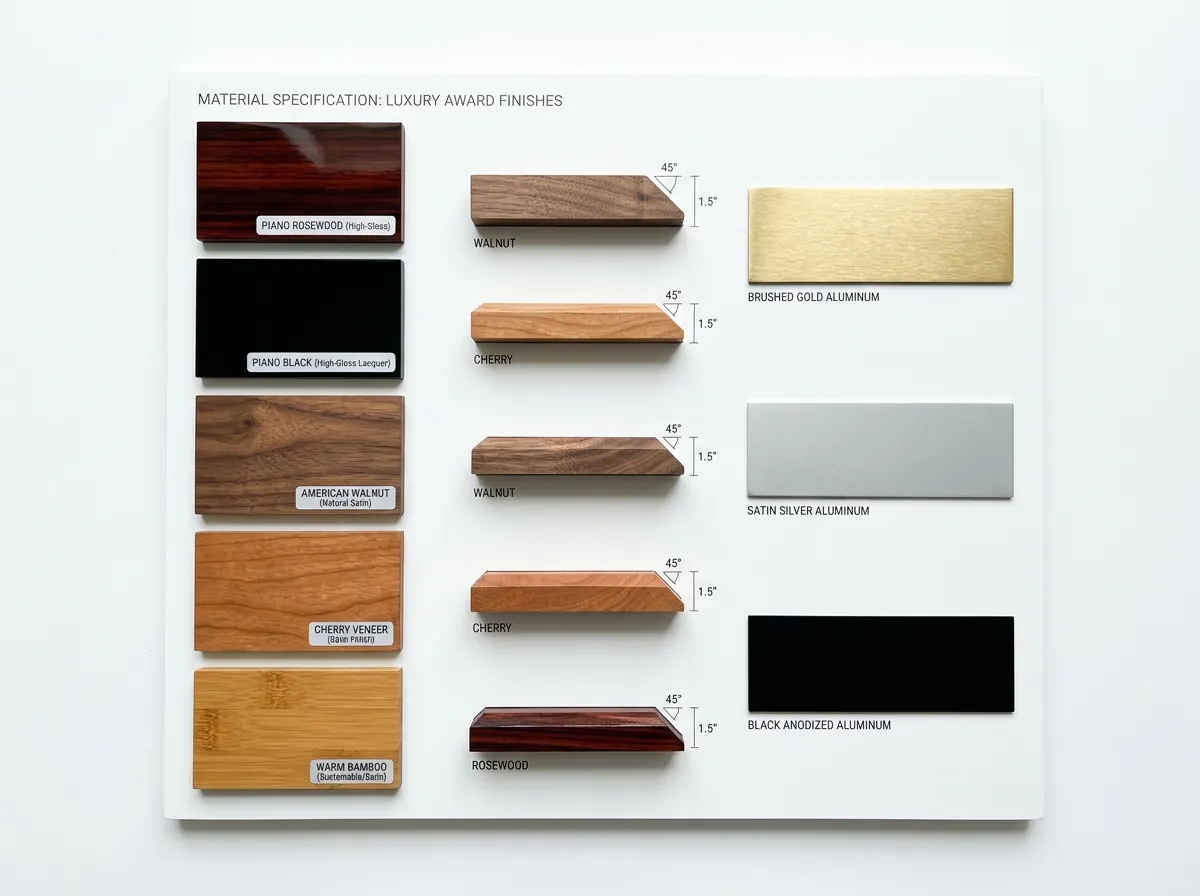
1. Piano Finish Rosewood & Black (E1 High-Density Core)
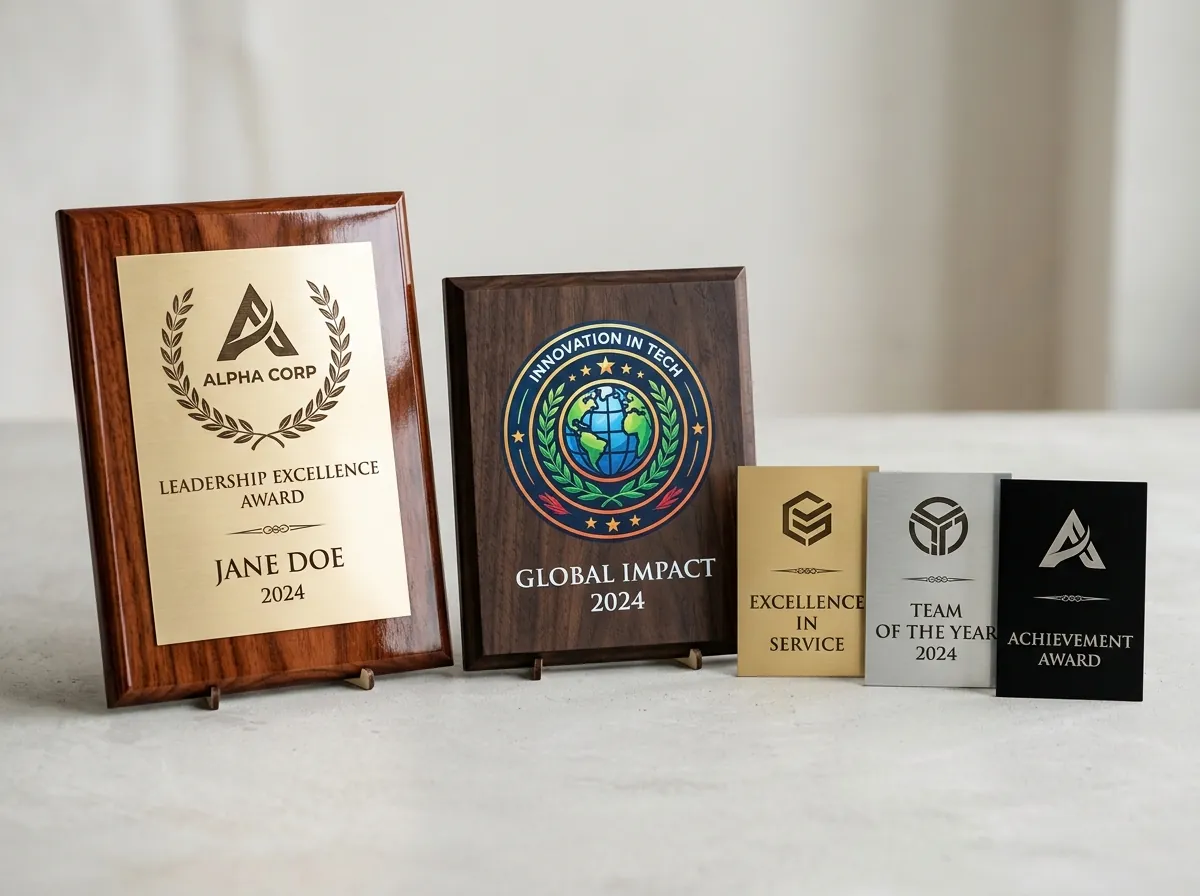
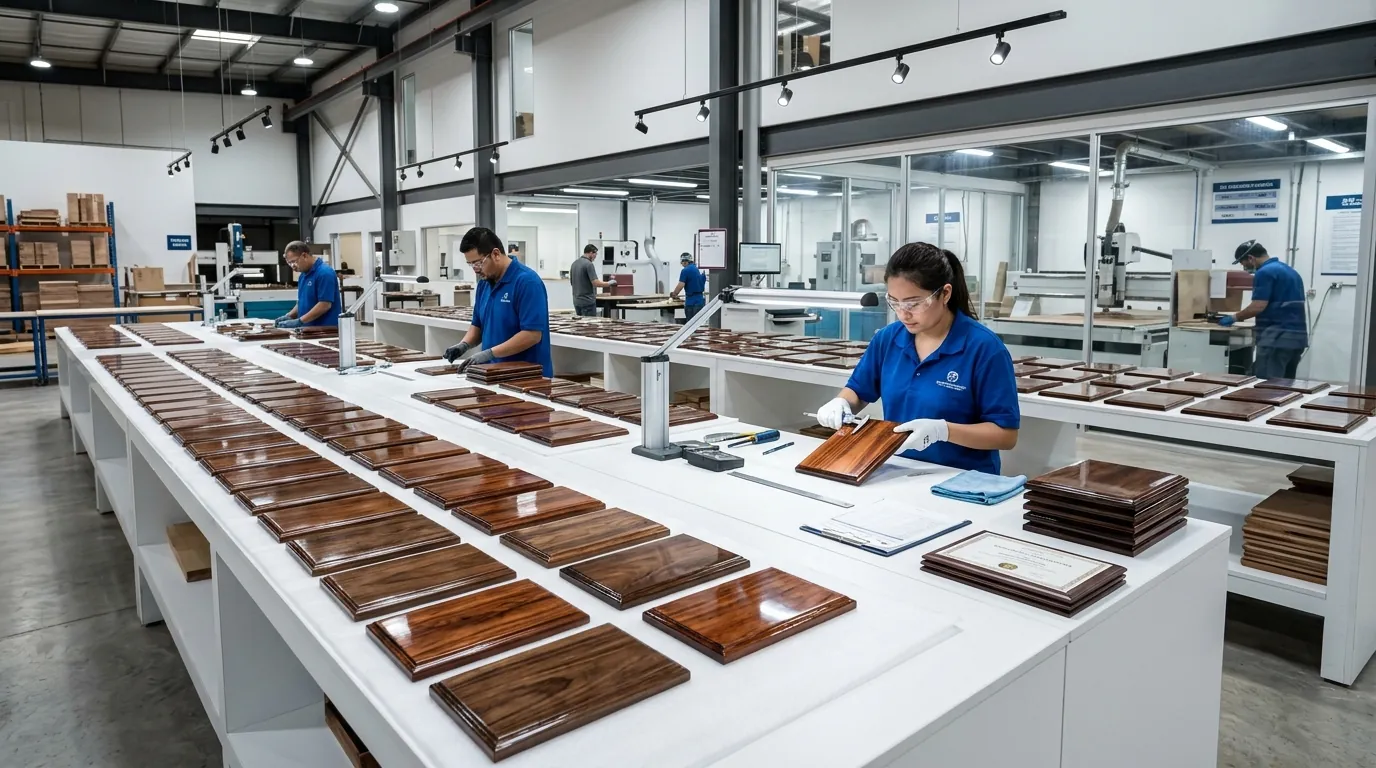
Built on a warp-resistant 750 kg/m³ E1 MDF core sealed under 12 coats of hand-buffed polyurethane lacquer. Because MDF does not expand unevenly across wood grain, mirror-gloss piano finish stays crack-free across years of office display. Best paired with brushed gold/silver metal plates or floating acrylic panels rather than direct wood laser burning.
2. Solid American Walnut & Red Alder
Genuine hardwood kiln-dried to 8–10% moisture content. Essential when your clients request direct CO2 laser engraving into wood grain, deep color-filled typography, or heritage executive aesthetics. Every piece displays natural grain variation.
3. Satin MDF Wood Veneer
Designed for high-volume institutional, school, and sports league contracts where price consistency and uniform color across 500+ units matter most. Accepts 3M-backed metal plates cleanly and ships at the lowest unit cost.
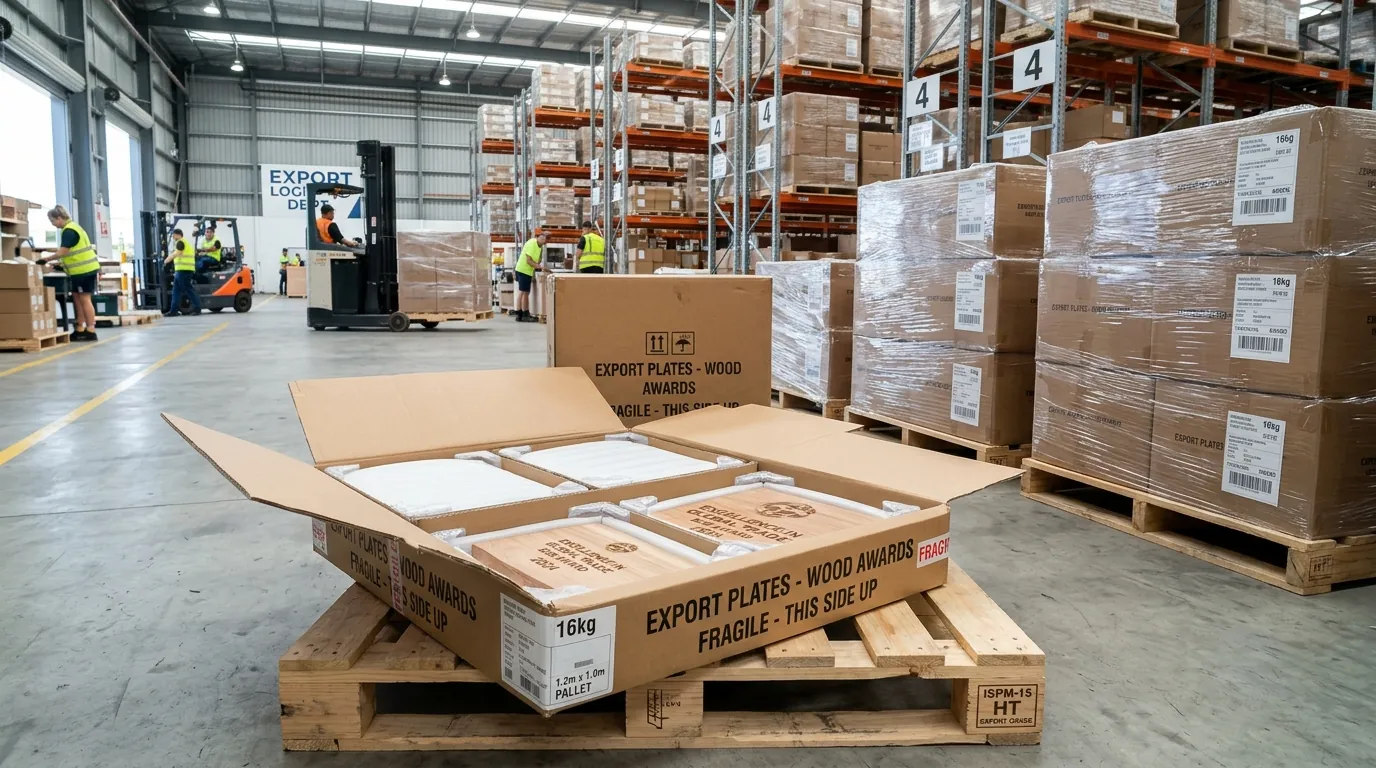
High-gloss wood plaques are dense and sensitive to corner impact. Over two decades of shipping to North America and Europe, JMNY discovered that carton weight—not just foam thickness—is the biggest predictor of freight damage.
Why We Cap Master Cartons at 16–18 kg
Cartons exceeding 23 kg are routinely tipped or dropped by warehouse staff during LCL deconsolidation and courier transfers. By packing 24 pcs of 8″×10″ plaques per 5-ply double-wall carton (~18.0 kg gross), every box stays comfortably within single-person lifting ergonomics.
1.2m × 1.0m ISPM-15 Palletization & DDP Clearance
- Standard 1.2m × 1.0m heat-treated pallets carry 24–28 master cartons securely strapped with heavy kraft corner protectors.
- Under DDP (Delivered Duty Paid), JMNY coordinates ocean or air freight, US/EU customs entry, tariff settlement, and final liftgate truck delivery straight to your receiving door.
A crisp laser-engraved metal plate loses its perceived value instantly if a corner lifts six months after presentation. Matching the transfer adhesive to the plaque surface energy prevents callbacks.
When to Specify 3M 467MP
Ideal for smooth, high-surface-energy coatings like Piano Finish Rosewood, Piano Black, and glossy sublimation boards. Delivers thin-profile, shear-resistant bonding with zero edge ooze.
When to Specify 3M 300LSE
Recommended for low-surface-energy matte sealers, textured walnut open-pore grain, and heavy 0.8mm–1.0mm solid brass plates. JMNY laminates genuine 3M backing sheets before CNC shearing so adhesive reaches flush to every plate corner.
More than 45% of annual US and European corporate recognition plaques ship between October and mid-December. Planning stock replenishment 8–10 weeks ahead protects your shop from emergency air-freight premiums.
Mix-Size Optimization Strategy
- Anchor 60% of pallet volume in core sizes (7″×9″, 8″×10″, 9″×12″) in Piano Rosewood and Solid Walnut.
- Fill remaining pallet tiers with 5″×7″, 6″×8″, and pre-cut brushed gold/black brass metal plates (100 pcs MOQ per size).
- Confirm orders by late August for Sea DDP arrival in early October.
Older wholesale plaque suppliers often ship blank boards with zero hanging hardware or a single portrait slot, forcing engravers to nail sawtooth hangers manually or stock separate vertical and horizontal SKUs.
JMNY Dual-Slot CNC Standard
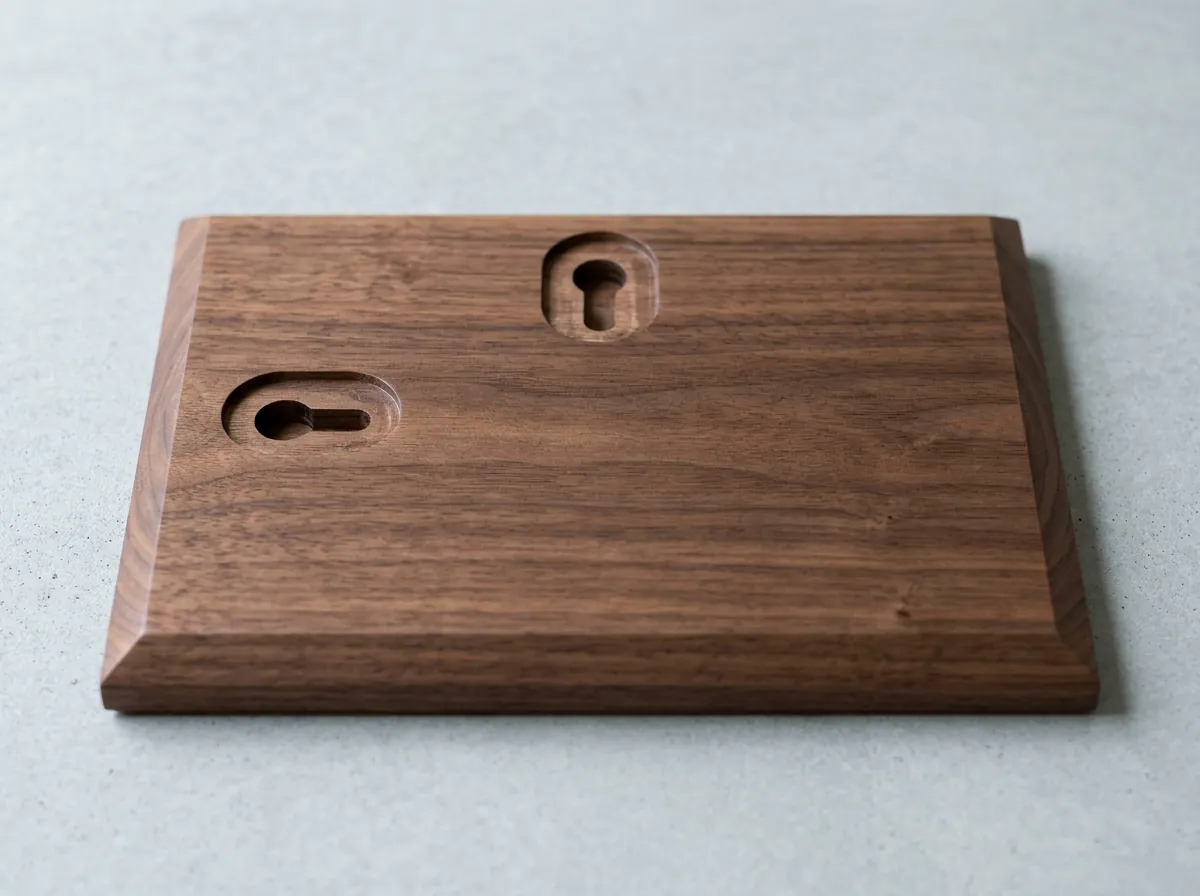
Every standard JMNY rectangular board arrives with two burr-free CNC-routed keyhole slots (10mm bore, 5.5mm neck, 9mm depth) centered on both the top and side axes. Your shop cuts inventory complexity in half and guarantees every award hangs completely flush against the wall.
Evaluating a direct wood plaque manufacturer requires verifying technical discipline beyond unit price alone. Ask every prospective supplier these seven questions:
- 1. What is your timber and MDF moisture control range (target 8–10%)?
- 2. Are piano lacquer booths positive-pressure dust-controlled, and how many coats are applied?
- 3. Do you seal the reverse side of the plaque to prevent humidity bowing?
- 4. What is your master carton gross weight cap (target 16–18 kg)?
- 5. Do you provide pre-shipment photo QC reports before balance payment?
- 6. Can you match our existing distributor wood finish codes on repeat batches?
- 7. Can you quote transparent FOB and door-to-door DDP freight side by side?